Why is Stakeholder Trust the Secret Ingredient in Social Intelligence?
Enterprise Brand Risk Management for Board-Level Governance
Discover 6 SIGNAL moves to turn social media data into strategic business decisions
Just starting with social listening? It’s tempting to get caught up in all the bells and whistles, isn't it? There are dashboards to explore, queries to build, and more data than you can shake a stick at, all just a click away.
But if you’ve spent any time in PR, comms, or marketing, you probably know the feeling: you dig up a treasure trove of insights, share them with your team or leadership, and... crickets. The report gets tucked away in someone’s inbox, and business goes on as usual.
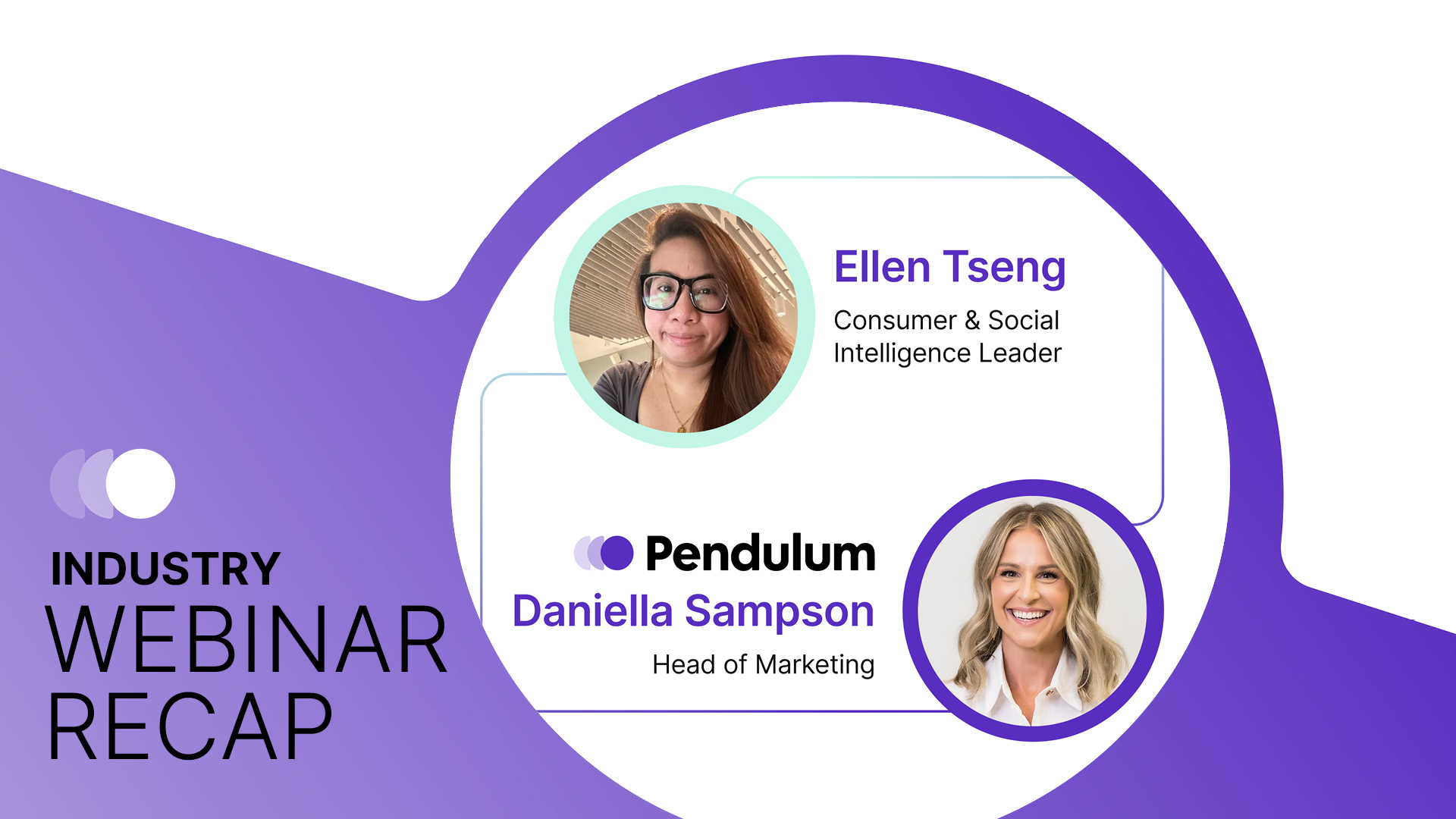
Our Head of Marketing, Daniella Sampson, sat down with Social Intelligence Expert Ellen Tseng to dive into how social data lives and dies with stakeholder trust. Discover their insights below:
Why does social data so often end up as an afterthought?
According to Ellen Tseng (Social Intelligence Leader for Global Tech & Consumer Brands) and Daniella Sampson (Head of Marketing at Pendulum), the answer has nothing to do with the numbers themselves. It’s all about trust.
As Ellen puts it: “The best insight in the world does not move anything if the person receiving it does not trust the person delivering it.”
She notes that true intelligence work is an exact 50/50 split:
- 50% Research: Understanding your data, maintaining academic rigor, and weaving a defensible story.
- 50% Relationship: Understanding the exact choices your stakeholders face and knowing what keeps them up at night long before you hand over a report.
If we want our work to actually shape decisions (instead of just being a nice-to-have report after the fact), it’s time for a new approach. That’s where the SIGNAL Map comes in—a practical way to turn all that social data into something your stakeholders can’t imagine working without.
Why Social Data Gets Ignored (And How to Fix It)
Before we jump into solutions, let’s get real about why social listening data sometimes gets pushed to the sidelines in comms and PR:
- It comes in after the fact: The data lands after the big decisions are already made.
- It’s wrapped in jargon: We talk about "sentiment scores" and "share of voice" instead of metrics business leaders actually care about.
- It’s used to validate, not guide: Sometimes, social data just gives us a pat on the back after the fact, instead of helping shape the decision in the first place.
To break out of this cycle, here are six moves, which Ellen calls SIGNAL, that can help you go from being seen as just the social listening person to becoming a true social intelligence partner.
1. See the Decision, Not the Dashboard
Instead of starting with what your tools can track, start with what your stakeholder is actually deciding. After all, a chart only matters if it helps someone make a better choice.
- Try asking your stakeholder: “What is the biggest call you are making this quarter where you wish you had a better reach?”
- The goal: Get a sense of what decisions are really on their plate this quarter, instead of just ticking off weekly deliverables. Work backward from those choices to spot the social signals that can help.
2. Identify Who
Sending an insight to the wrong person is just as unhelpful as drawing the wrong conclusion. It helps to know who actually signs off on a strategy and who just influences it so that you can tailor your message to each group.
- Try asking: “Who else needs to believe this before it becomes an active decision, and who do they listen to?”
- Pro-Tip: Find your inside translator; someone who already trusts your work and is close to the decision-maker. It’s also smart to know who your skeptics are ahead of time, so you can answer their questions before the big meeting.
3. Get Their Language
If your organization already uses things like Voice of the Customer (VOC), market research, or PR scorecards, don’t reinvent the wheel. Use the language your team already knows and trusts.
- Try asking: “How would our market research team describe this trend? Let me show how social fills the immediate gaps between their quarterly studies.”
- The goal: Skip the listening jargon like "sentiment tracking." Instead, show how social media can serve as the always-on layer that fills the gaps between surveys and focus groups.
4. Name the Worry First
Trust comes from naming the real worries your leadership team is already thinking about. Start with what’s keeping them up at night, not just your latest data point.
- Try framing your update like this: “I know customer churn in our new user segment is the primary metric you're watching right now. Here is exactly what customers are saying online weeks before it starts showing up in our hard data.
- The goal: Help your stakeholders feel seen and understood before you dive into the numbers. Being relevant always matters more than sharing a mountain of data.
5. Anchor to a Decision
Every insight you share should be tied to something the business is already working on. Random facts tend to get lost, but insights connected to real decisions are the ones that spark action.
- Try saying: “If you are currently deciding between Campaign Route A and Route B for the upcoming launch, here is the real-time feedback that tips the scale, and here is what it could cost us to guess wrong.”
- The goal: If you can’t clearly say what decision your data supports, it’s okay to hold off sharing it. Go beyond just reporting numbers; offer up clear recommendations your team can use.
6. Loop It In
If you only respond to one-off data requests, your work remains optional. To become essential, try weaving social intelligence directly into the business's regular planning rhythm.
- Try proposing: “Can I bring a tight, two-minute customer signal read to our monthly leadership meeting?”
- The Goal: Become a regular at the table. And when your insights make a difference, don’t be shy; let leadership know exactly what changed or what headaches you helped avoid.
At the end of the day, even the fanciest listening platform won’t get you far if you don’t have strong relationships. The data part is the easy bit; building trust across your organization is where the hard work shows results. When you focus on the people and decisions behind all those digital conversations, your insights will never be just an afterthought again.
Connect with the masterclass speakers on LinkedIn to share how you're using the SIGNAL map in your PR and Comms workflows: Daniella Sampson and Ellen Tseng.
Want to know how your social listening strategy stacks up? Take our free social intelligence audit!
Related Articles
Explore deeper insights and practical perspectives related to this topic.



Times Have Changed. So Should Your Tech Stack
See how brands are upgrading their strategies with Pendulum Social Intelligence.