
Text is no longer the sole king of social intelligence data. #tags and @mentions have lost their value.
Have you ever questioned how many photos get uploaded online every day? Social media runs on visuals, with billions of users on Facebook, TikTok, YouTube, and Instagram each month. With so many images, how can we keep up? How can brands track their mentions and know for sure what the world is saying about them?
Without automated systems to analyze these visuals, most insights hidden in our social media feeds would remain invisible.
Enter the magic of computer vision.
Computer vision enables computers to analyze images and unlock the rich narratives and context within those pixels.
Reading Between the Pixels: Captioning and OCR
Show a friend a photo of a busy street, and they can tell you who’s there, what the signs say, and what’s happening. Computer vision can do this too, thanks to two main tools: Image Captioning and Optical Character Recognition (OCR). Image captioning creates detailed descriptions of scenes. For example, it might look at a crowd and recognize protesters at an outdoor event, using signs in the background to figure out it’s a developer conference.
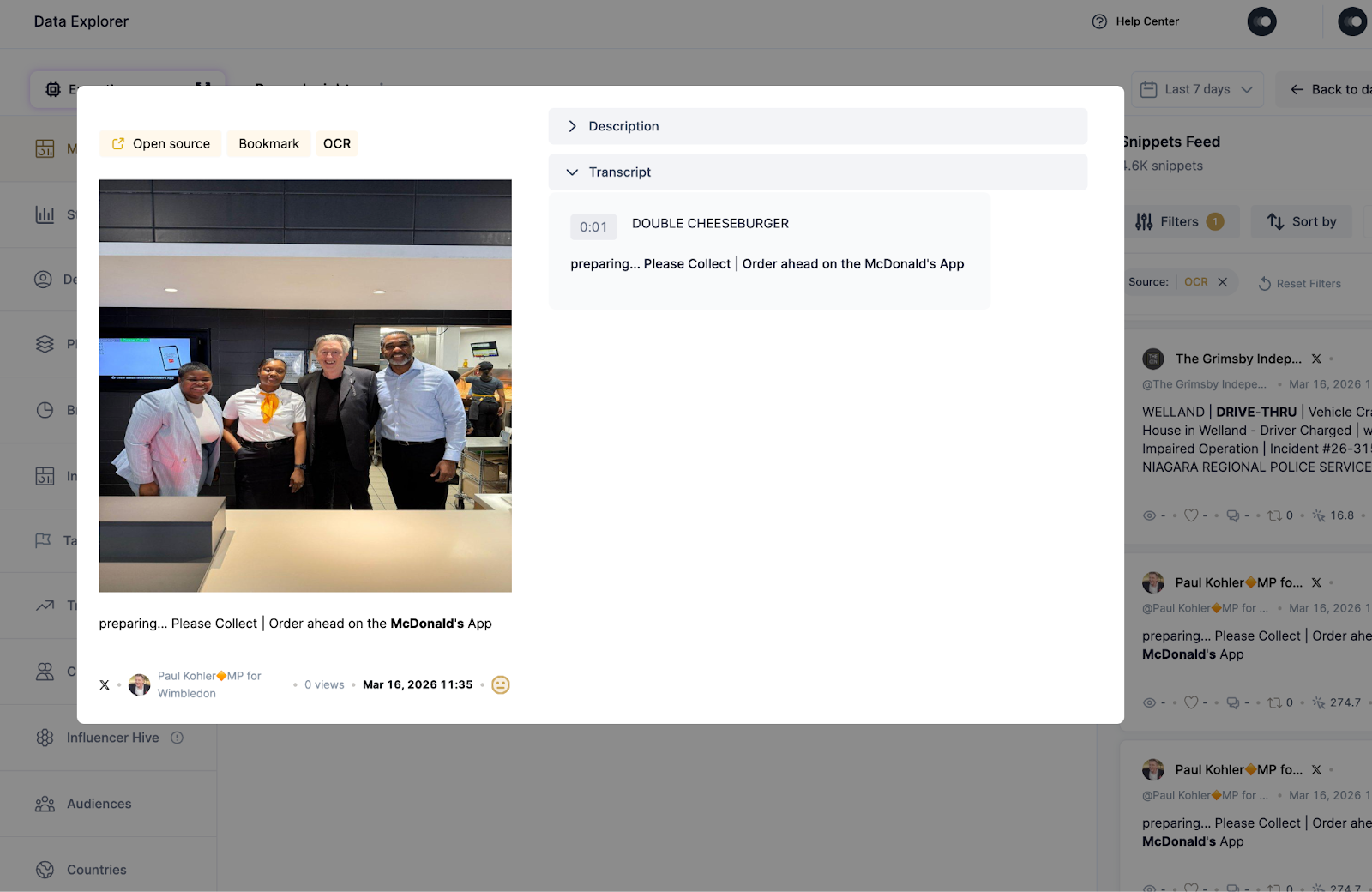
OCR is an effective way to find and read text in images. It’s accurate enough to read small print on a McDonald’s online order screen or text on a makeup review. By turning pixels into useful information, these tools make photos easy to search and use.
McDonald’s Order Screen Found by Pendulum Computer Vision
I Spy with My AI Eye: Logos and Products
Brands want to know where and how their products show up online. Computer vision can automatically spot company logos, such as Apple, Amazon, Starbucks, Microsoft, and Walmart, in social media images and videos. This helps companies track unauthorized use, see brand visibility, and understand the competition.
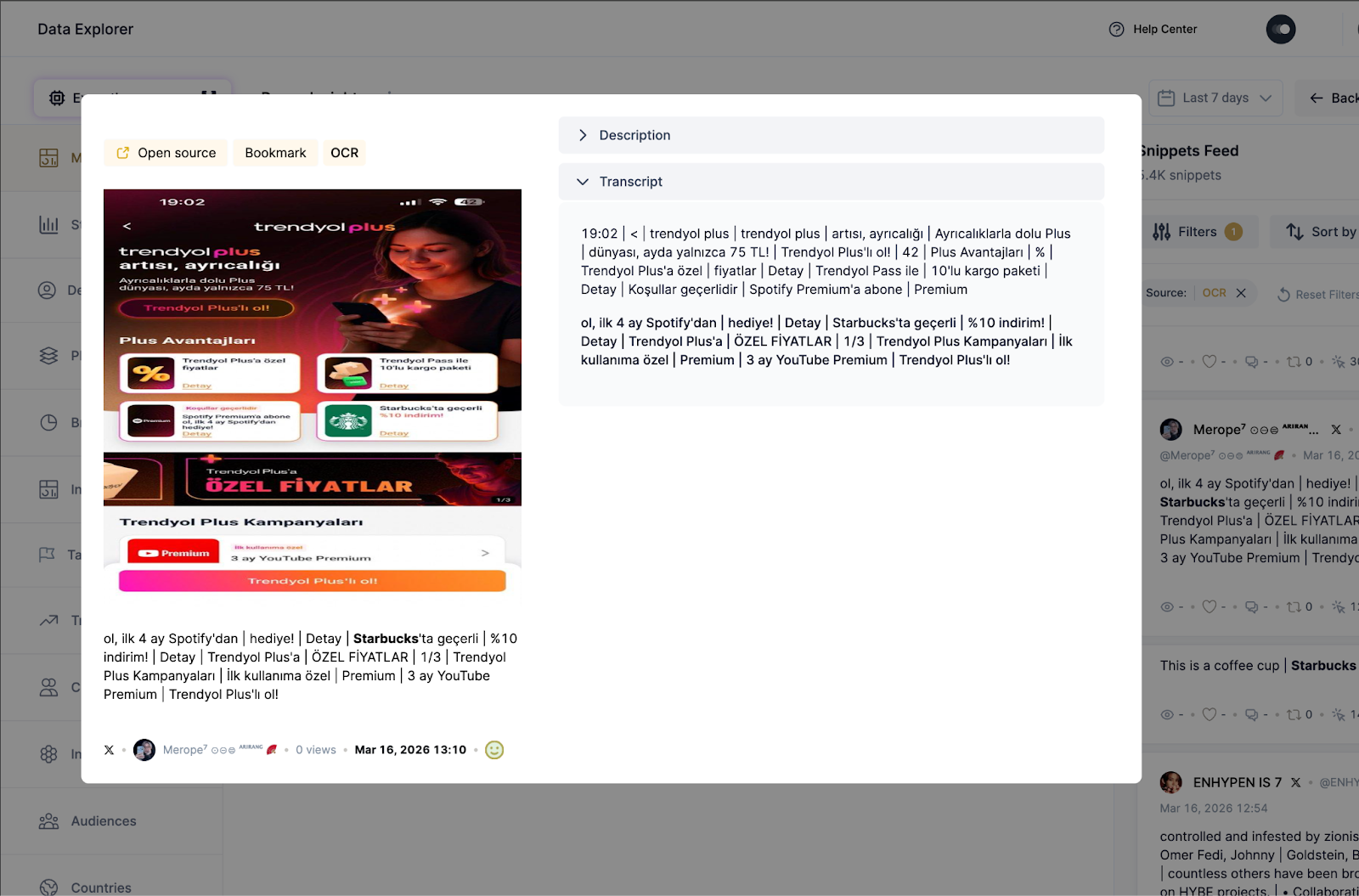
But computer vision can do more than just find logos. Complex systems can identify specific product versions or detect when something is broken or damaged. For example, the AI can identify a specific shade of MAC lipstick called Twig, recognize the damaged back of an orange iPhone, or identify a damaged Tesla Model Y after a crash test.
Faces in the Crowd: Person of Interest Detection
Just as your phone can group photos of friends and family, the same technology is used to identify people on a much larger scale. Computer vision can recognize known individuals, such as tech executives Jeff Bezos, Eric Yuan, and Andy Jassy, by mapping 68 facial points to create a digital signature.
Because our AI is trained on multiple facial angles, it can still recognize an individual even if the face is turned away, covered by glasses or a mask, blurred, or otherwise altered.
Detecting Weapons and Hate Symbols
Computer vision is also important for digital safety. Teams use it to automatically flag harmful content, including digital hate symbols like the Nazi flag or the Blood Drop Cross. Combined with a focused search query, it can even spot hateful memes.
This technology is also very fast and accurate at detecting weapons, such as guns, knives, and explosives.
Fighting Fake News: Image Search and Misinformation
One of the most important uses of computer vision today is combating visual misinformation, such as fake images and deepfakes. During big global events, false pictures can spread quickly. For example, a dramatic video of an airstrike might actually be from the game Arma 3. Or, a photo said to show a crocodile attacking a migrant in the Darien jungle could really be an old photo from Mexico. Computer vision also helps spot edited images, such as fake protest photos or AI-generated images of babies during a war, when used through our Smart Search.
Using reverse image search and mathematical comparisons, algorithms can identify where a photo came from, spot exact matches, and detect whether an image was edited or used out of context. This helps fact-checkers and journalists quickly expose fake news and share the truth.
Computer vision works behind the scenes at a scale, processing about 1.75 million images every day. It reads can decals, spots lipstick shades, catches deepfakes, and helps keep platforms safe. Computer vision is one of the most effective tools for making sense of today’s visual internet, and here at Pendulum, we ensure our computer vision brings your brand mentions to the forefront, no matter where they appear.
Performance at Scale: Insights Across Platforms
Pendulum stands at the forefront of this new brand management frontier, processing millions of images and visuals every day to ensure no brand mention or critical insight remains invisible.
By leveraging advanced computer vision, Pendulum does everything discussed here and more:
- Comprehensive Recognition: From reading the fine print on a McDonald’s order screen via OCR to identifying specific product versions, we turn raw pixels into searchable, actionable data.
- Advanced Person & Logo Tracking: We go beyond simple brand logos to identify specific product damage and recognize key individuals through complex facial mapping, even when obscured by masks or angles.
- Digital Safety & Truth: Our Smart Search can help you actively combat misinformation by exposing deepfakes and flagging harmful content, including weapons and hate symbols, to keep your brand and community safe.
- Cross-Platform Mastery: Whether it's identifying matches through image captions on Instagram or OCR on TikTok, Pendulum provides a unified view of your digital presence across the entire visual internet.
At Pendulum, we unlock the rich narratives across the entire multimodal social landscape to bring your brand to the forefront.
Contact our team to see how your brand shows up.
FAQs
Computer Vision and Social Intelligence
General Overview
What is computer vision, and why is it important for social intelligence?
Computer vision is a technology that allows computers to analyze images and videos to unlock the context and narratives within pixels. It has become the new frontier of social intelligence because visuals now dominate social media, rendering traditional data like hashtags and @mentions less effective for tracking brand presence.
How does computer vision help brands track their online presence?
Without automated systems, most insights in social media feeds would remain invisible. Computer vision allows brands to:
- Automatically spot company logos (e.g., Apple, Starbucks, Microsoft).
- Track unauthorized brand use and monitor competitors.
- Identify specific product versions or even detect if a product is damaged, such as a cracked iPhone or a crashed Tesla.
Technical Capabilities
What are Image Captioning and OCR?
These are the two primary tools used to turn pixels into searchable information:
- Image Captioning: Creates detailed descriptions of scenes, such as identifying protesters at a specific developer conference.
- Optical Character Recognition (OCR): Finds and reads text within images, including small print on digital order screens or text in makeup reviews.
Can the technology recognize specific people?
Yes. By mapping 68 facial points to create a digital signature, computer vision can recognize known individuals like tech executives Jeff Bezos or Eric Yuan. The AI is trained on multiple angles, allowing it to identify people even if they are wearing masks, glasses, or if the image is blurred.
Safety and Fact-Checking
How is computer vision used for digital safety?
The technology is used to flag harmful content, including:
- Weapons: Rapidly detecting guns, knives, and explosives.
- Hate Symbols: Identifying digital hate symbols like the Nazi flag, as well as hateful memes.
Performance and Data Insights
Which platforms provide the most data through computer vision?
Data matches are distributed differently across social platforms. For example:
- Instagram: 36% of matches come from Image Captions and 23% from OCR.
- Twitter: 17% come from Image Captions and 14% from OCR.
- Gab: 20% come from Image Captions and 21% from OCR.
What is the scale of Pendulum’s processing power?
Pendulum processes over 1.75 million images every day across the visual internet to ensure no brand mention remains invisible.
Want to know how your social listening strategy stacks up? Take our free social intelligence audit!
Related Articles
Explore deeper insights and practical perspectives related to this topic.




Times Have Changed. So Should Your Tech Stack
See how brands are upgrading their strategies with Pendulum Social Intelligence.