Social Intelligence Is the New Currency of PR, and Agentic AI Is the Mint
The morning after Burson took home the Grand Prix in PR in the crisis and issues category, the conversation turned to the future.
The win was proof of a thesis the smartest agencies have been building toward: that social intelligence, the deep, real-time understanding of where communities live, what they believe, and how they move, is the most powerful raw material in modern communications. And agentic AI is what makes it possible to harness and understand that data at scale.
This is a story about technology finally giving instinct the data it always deserved.
The Shift Nobody Saw Coming (But Everyone Can Now See)
Ask any senior PR leader what the job really is, and they'll tell you some version of the same thing: find the people who matter, understand what they care about, and show up for them in a way that feels true. That has always been the art.
What has changed dramatically and irreversibly is the science underneath it. That difference is social intelligence: listening to what people say online and, more importantly, understanding the structure of communities, the velocity of conversations, and the cultural signals that separate a fleeting moment from a lasting movement. Historically, the tools to do this in depth and at speed didn't exist in a form that agencies could operationalize. Agentic AI changed that.
Where a team of analysts once spent days mapping audience landscapes, agentic workflows now surface those insights in minutes with a specificity and breadth that no human research process could match. The result is better-informed, timely work. Work that lands precisely where it is meant to. Agencies embracing social intelligence can now discover where the subcultures gather, who the people really are, and where the work must show up to make an impact.
From Loudest to Most Resonant
The cultural implications of social intelligence as a strategic foundation are profound, and Cannes 2026 put them on full display. PR clients now understand that you don't have to be the loudest to be the most effective; in fact, it's the opposite.
According to Michelle Hutton, Global Chief Client and Growth Officer at Burson, depth has become the ultimate differentiator.
"Brave clients now understand that getting closer to the communities that really matter is the most impactful work," she notes.
This is the reframe that the entire PR industry needs to absorb. The old model was reach: how many eyeballs, how many impressions, how big the megaphone. The new model is resonance: how deeply does this land with the specific groups whose beliefs and participation move the needle for a brand? You cannot engineer resonance without social intelligence. You cannot know which community, which cultural moment, which authentic angle to pursue without the data to see what others can't.
Mark Listes, CEO of Pendulum put a sharper point on it: "My phrase for the week is going from relevancy to participation when it comes to our audiences in these campaigns."
That shift from being relevant to inspiring genuine participation is only achievable when you understand your audience at the community level, not the demographic level. Agentic AI makes that understanding operationally possible for the first time.
The Engine Behind the Insight
Here is where social intelligence and agentic AI become inseparable.
Social intelligence without speed is just research. When social data requires weeks of manual analysis and lengthy synthesis, the cultural window has already closed, and you are left with historical research. You want data that serves the next campaign, not the last one. What agentic AI introduces is the ability to turn social intelligence into a live operational input: always on, always current, always feeding into strategy, creative, and measurement simultaneously.
Pendulum's own data from early adopters tells the story quantitatively: work that previously required four hours is now completed in fifteen minutes, a 93% reduction in time. But the more important number isn't the time saved. It's what that time unlocks. It's about giving our people more time to do the level of thinking they now need.
When agentic systems handle subculture mapping, signal detection, narrative tracking, and performance synthesis, strategists and account leaders are freed to focus on the work that matters most. This is the work that has always been in the shortest supply: judgment. Cultural intuition. The ability to look at what the data is showing and know, with the confidence that only comes from experience, what it actually means for the client.
Listes framed this through a deceptively simple analogy. A junior locksmith struggles for an hour and earns their fee through visible effort. A senior locksmith opens the door in five minutes, and what you're paying for isn't the time. It's the thirty years of knowing exactly which tool to reach for.
"We're paying for the age-old wisdom and the taste of decision-making, not the struggle of getting there," Listes said. "There is a world where our teams can operate like the senior locksmith."
Agentic AI is what gives every team member on the account the senior locksmith's toolkit.
Social Intelligence as a Commercial Argument
None of this matters if it can't be communicated to the people who approve budgets. And here, the social intelligence thesis offers PR agencies something they have historically struggled to produce: proof.
For the first time, the combination of social intelligence and agentic AI allows agencies not only to demonstrate what they did, but also to predict and measure the value of their actions. You can show which communities were reached and how they responded. You can track sentiment shift in real time. You can tie earned media and consumer engagement directly to commercial outcomes. You can, as Hutton put it, "measure the impact of that work like never before, and predict the success of the work." This is what unlocks the commercial conversation that the industry has been circling for years.
Social intelligence is the evidence base that makes value-based pricing defensible. When you can show a client that your agentic social intelligence capability identified the exact community, the exact cultural moment, and the exact narrative that drove a measurable outcome, you are no longer selling time and materials. You are selling results. Social intelligence gives agencies the language to have that conversation with specificity, measurability, and demonstrated return.
"We're thinking differently about how to have those conversations with the commercial leaders across our client organizations," Hutton said, "because until they sign up to this thinking, we're never going to be able to move forward." Real alignment requires a shared language of value and return.
The Agencies That Will Define the Next Era
"If you can get your car to go 10 miles an hour faster through the corner, you are coming out at a higher velocity than your competitor," Listes said. "That corner is the moment that we're at right now."
In this framing, the corner is the window through which social intelligence powered by agentic AI remains a differentiator rather than a baseline expectation. Agencies are embedding these capabilities into their operating models, restructuring teams around them, and using them to deepen client relationships focused on value rather than volume. These agencies are not just moving faster. They are coming out of this moment on a fundamentally different trajectory.
The agencies that win the next era of PR will be the ones that understood, early enough to act, that the most powerful thing they could offer a client was not reach, not impressions, not even creative excellence in isolation. It was knowledge. Specific, timely, community-level knowledge about where culture is moving and how a brand can show up authentically within it.
Social intelligence, powered by agentic AI, is the gateway to that capability.
"I'd love to be sitting here this time next year with some proof points around how brave clients have accepted that challenge," Hutton said, "and have fundamentally allowed us to think differently about how we shape our team, how we price for our work, how we deliver our work."
The proof points are already written; the time and dollar savings are calculated. Agencies must innovate, adopt, and drive deeper social intelligence for their clients, or risk watching the industry's next era of success move forward without them.
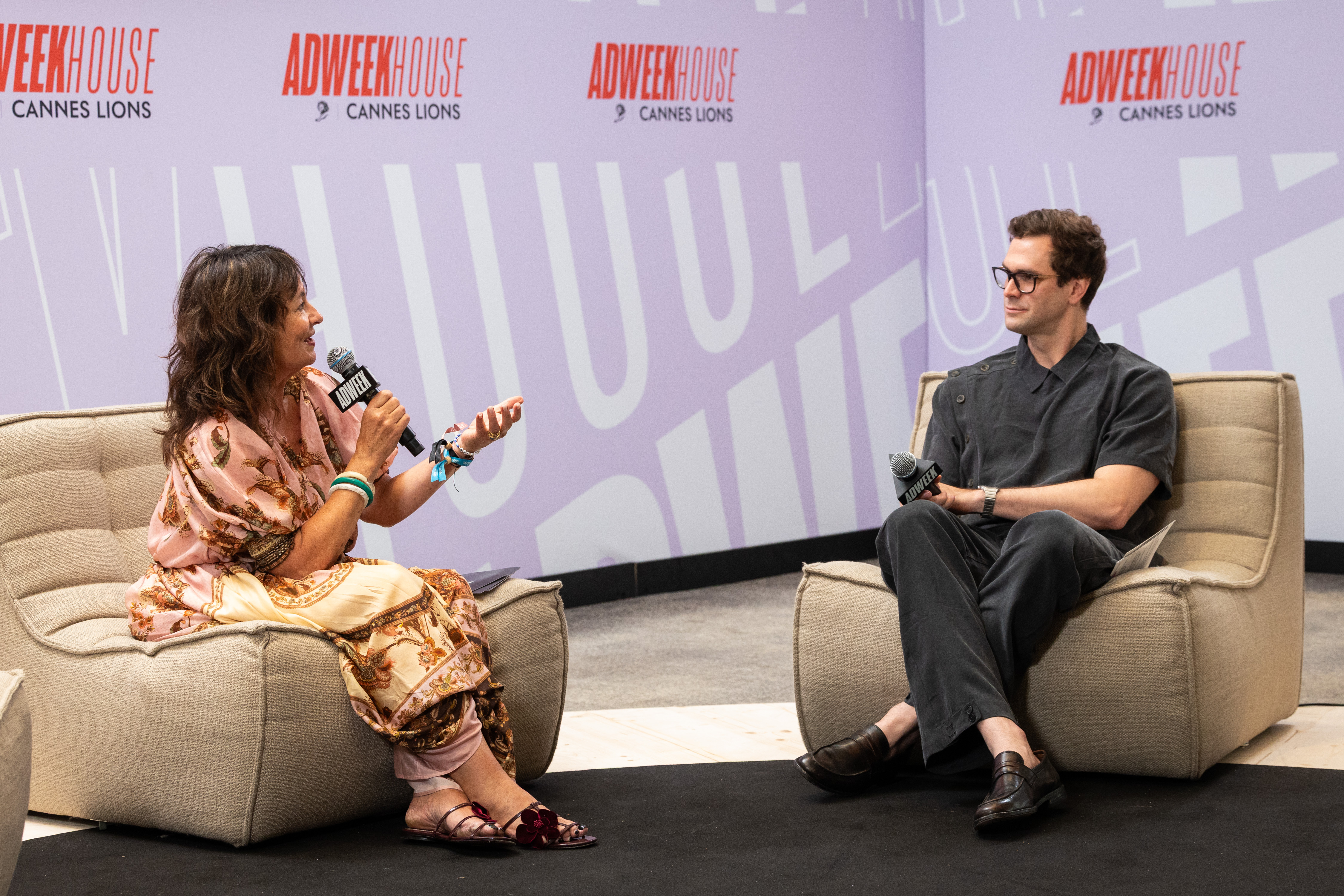
Watch the full interview with Mark and Michelle here.
Want to know how your social listening strategy stacks up? Take our free social intelligence audit!
Related Articles
Explore deeper insights and practical perspectives related to this topic.



Times Have Changed. So Should Your Tech Stack
See how brands are upgrading their strategies with Pendulum Social Intelligence.