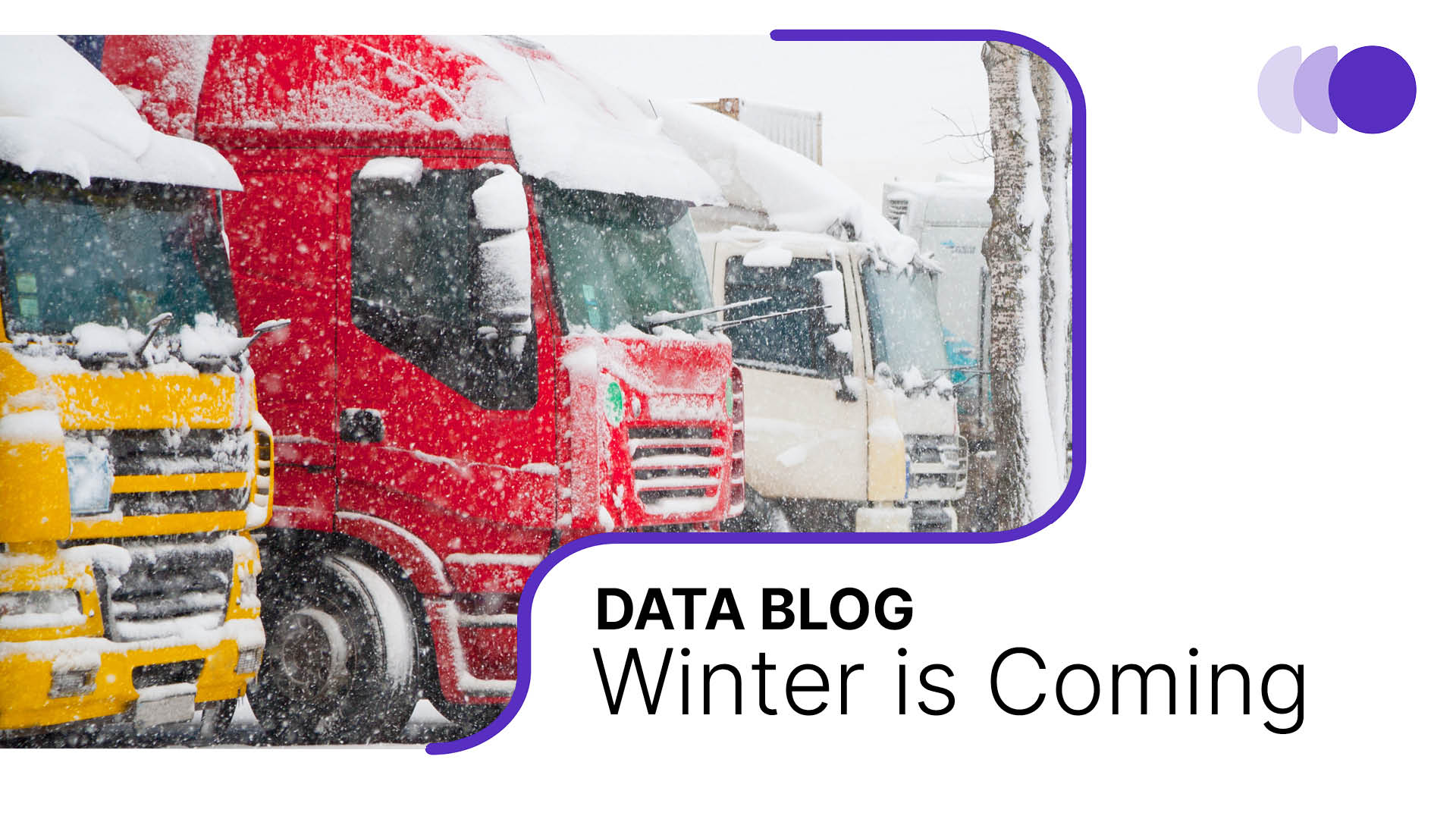
The Most Boring Small Talk on Earth Is Quietly Running the World
A week of social conversation about the Winter 2026-27 Super El Niño forecast, tracked September 1-8, 2026, surfaced early signals across five industries; apparel and retail, insurance and real estate, travel and hospitality, agriculture and CPG, and home services weeks before those sectors typically start planning around seasonal weather data.
Weather is the safest, dullest conversation filler there is: the thing you say to a stranger in an elevator. It's also the thing that reroutes shipping lanes, resets harvest calendars, moves insurance premiums, and once turned a 70,000-person art festival into a very expensive mud pit. This week, we looked at what the internet is actually saying about Winter 2026–27 and found something that reads a lot more like an early warning signal than small talk.
Nobody has ever said "let's talk about the weather" and meant "let's discuss a topic with genuine global stakes."
It's the go-to line for when there's nothing else to say.
And yet: weather decides which ports get backed up, which crops make it to harvest, which festivals get flooded out, and, this week apparently, which insurance bill you're going to be annoyed about in March.
We pulled a week of the Winter 2026–27 / Super El Niño conversation, September 1–8, 2026, ran it through Pendulum, and filtered out the noise (a surprising amount of it). What we found was an early, unfiltered look at decisions that are about to ripple across retail, insurance, travel, agriculture, and home services, weeks before most of those industries will be watching for them.
Something this consequential is happening in plain sight, inside the most small-talk topic there is. The question worth asking: how much of it should change what your brand does between now and January?
Let's get into it.
Forget Grandma: Gen-Z Just Hijacked the Weather Report
Before we get to what's being said, a quick and genuinely surprising detail about who's saying it: weather chat carries a certain reputation, and the data doesn't back it up.
Millennials are the single largest generation in this conversation, narrowly ahead of Pre-Millennials (fine, sure, expected). But Gen-Z, despite showing up to the conversation exactly once, made that one appearance count: their lone post pulled in more engagement than the entire Millennial and Pre-Millennial conversation combined. And when we sliced it by age instead of generation, the single most-engaged bracket was 23-year-olds, not retirees checking their heating bills.
A topic this consequential, touching supply chains, insurance, and agriculture, is being watched closely by the generation about to be making purchasing decisions for the next thirty years. That's a distribution channel most brands aren't using yet.
What People Are Actually Saying, and Why It Matters
The short version: a lot of forecasters think this winter is going to be a Big Deal, and the specifics matter far more than "it's gonna be cold."
The biggest single moment of the week came from Max Velocity – Severe Weather Center on YouTube, whose video "Nobody Has EVER Seen A Winter Like This..." pulled 3.8 million views, more than every other tracked weather video in our dataset combined. His pitch: this winter is "shaping up to be a battle of extremes"between the Pacific Ocean and a wobbly polar vortex, framing that shapes how millions of people plan the next four months of spending, travel, and stockpiling.
TikTok creator cosmiccartography (68K followers, a normal, human-sized account) reframed the whole thing as a hurricane plot twist, racking up 209,500 views on a video arguing El Niño "may have flipped the entire 2026 hurricane map." A flipped hurricane map means shipping routes, insurance underwriting, and coastal tourism are all recalculating in the background.
Meanwhile, Newsweek noted the other side of it: El Niño "usually brings warmer conditions" to the northern U.S., which sounds pleasant right up until you remember that "warmer than expected" is exactly the kind of detail that quietly resets coat inventory, heating-oil demand, and ski-season revenue projections.
And Weatherman Plus offered the most useful sentence of the week, gently talking everyone off the ledge in his own video: yes, it's a strong signal, but "this doesn't mean that it's going to be a bust by far." Translation: the signal is real, but nuance is doing a lot of work here, exactly the kind of nuance that gets lost when headlines get skimmed instead of watched.
The Small Details That Are Big Deals
The most quietly important find of the week came from secret.chicago, an Instagram account that answered "will it snow a lot" with actual historical receipts, noting that a previous strong El Niño winter brought "below-average seasonal snowfall, like 15.5 inches in 1941–42." That's the exact kind of grounded, historical-comparison data point that turns a scary headline into an actionable planning number.
A small YouTube channel called Knowledge Panel (12,900 followers) posted a jaw-dropping 29 videos on this topic in one week, more than anyone else in the entire dataset, with one memorably teasing, "there is an entirely different kind of system," that forecasters were watching. High-frequency, consistent coverage like that is a signal in its own right: someone is treating this topic as worth daily attention, long before most industries are.
And then there's the one that really makes the point: a finance article about a U.S.–Canada steel tariff dispute, a story that has nothing to do with weather on its face, casually dropped in a line about "milder winter and softer demand for heavy coats." One sentence, buried in an unrelated financial story, is a genuine early demand signal for the entire outerwear category. The important stuff really is buried in the mundane places nobody's monitoring.
The Reach Goes Well Beyond Retail and Coats
That's five verticals from one week of data. Widen the lens, and "the weather" is the reason a container ship reroutes, a festival gets rained out, a harvest comes in light, or a coat sits on a shelf a little longer than planned. It surfaces as a sentence in a forecaster's video, a caption on a TikTok, a line in an unrelated finance story: exactly the places most monitoring tools aren't looking.
So What Do You Do With This?
Not everything labeled "Winter 2026" is actually about winter. This week alone, an esports tournament and a small parade of fashion campaigns were also using that exact phrase, noise that would throw off any brand tracking this topic with basic keyword monitoring. A content farm duplicated a roofing post four times over to catch the traffic wave. That's real; it's in the data, and it looks identical to signal without close inspection.
Underneath that noise, the actual meteorological signal — NOAA, the Old Farmer's Almanac, independent forecasters, and a mountain of model data — is remarkably consistent across sources that have no reason to agree with each other. A Washington-state YouTuber, a Chicago Instagram account, and Newsweek all land in the same place. That convergence is worth paying attention to, precisely because it's easy to dismiss as small talk.
The takeaway is that the most consequential conversations are often hiding in the most mundane ones, and the only way to find them is to look closely at what's actually being said rather than counting how often "winter" got typed. If you're in retail, insurance, travel, agriculture, or anything remotely weather-adjacent, this conversation already started without you. You've got a few weeks to catch up.
Catch this Week's Pendulum Pulse Episode 18 Weather Deep Dive on our YouTube Channel:
Related Articles
Explore deeper insights and practical perspectives related to this topic.



Times Have Changed. So Should Your Tech Stack
See how brands are upgrading their strategies with Pendulum Social Intelligence.